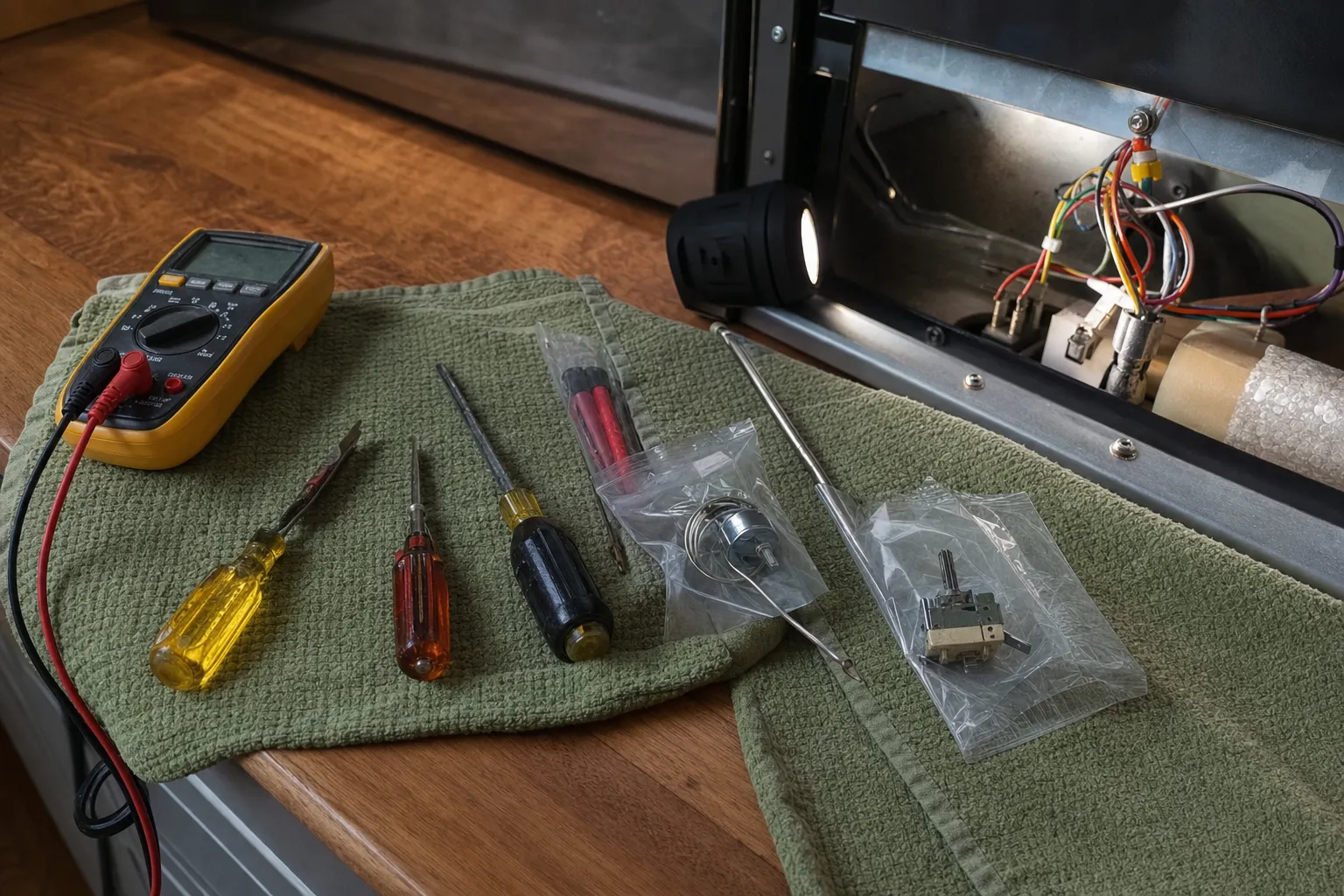
Freezer Repair
Why Frozen Food Grows Ice Crystals in a Sub-Zero
Ice crystals form when moisture leaves frozen food during small temperature swings and refreezes in the package. How Sub-Zero owners can stop it.
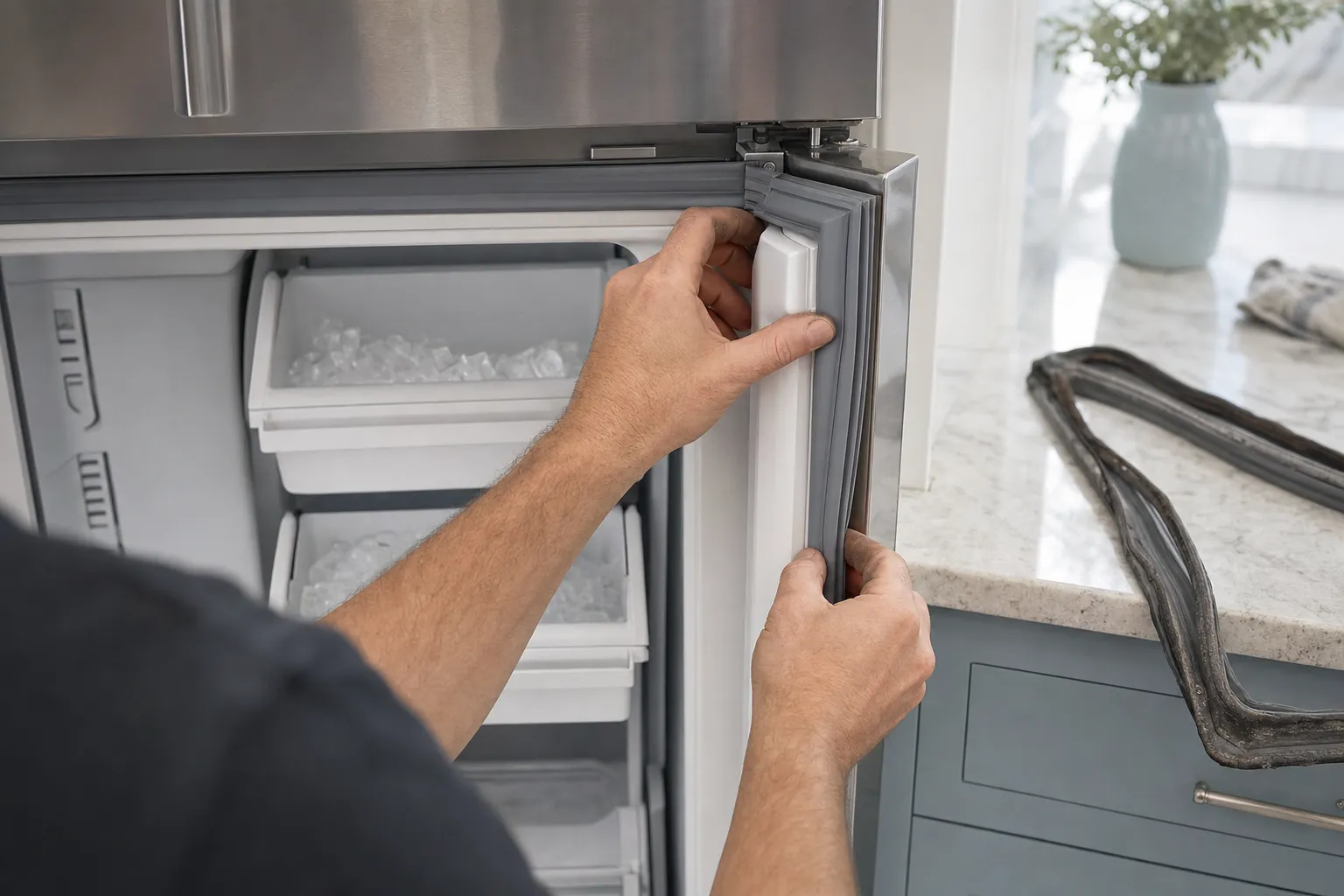
Ice crystals on frozen food are the food’s own moisture that escaped and froze again on the inside of its wrapping. Each time the air around a package warms slightly, a little of the ice in the food turns straight into vapor; when the freezer cools back down, that vapor settles as frost on the coldest surface nearby, which is the bag or the lid. A light dusting after a few months is normal. A thick, snowy layer, or pale and leathery patches on meat, tells you the temperature is swinging more than it should, through door habits, loose packaging or a worn part. Issaquah’s damp months make the effect easier to spot, because more humid air reaches the freezer every time it opens.
How water slips out of frozen food
Ice does not have to melt to move. At freezer temperatures it can change directly into water vapor, a process called sublimation, and that happens faster whenever the surrounding air is a few degrees warmer or drier than the food. Any pocket of air trapped in a bag gives the vapor somewhere to go. Once the compressor starts again and the cabinet chills, the vapor freezes onto the inside of the packaging as feathery crystals.
Over months of these small cycles, two things happen. The crystals grow larger, and the surface of the food dries out, turning gray-brown, tough and bland. That dried surface is what people call freezer burn. The cold itself does no harm; the damage comes from water leaving the food, one tiny swing at a time.
Why every frost-free freezer swings a little
A modern freezer never holds a single exact temperature. The compressor runs until the cabinet reaches its set point, rests, and starts again once the air drifts a degree or two warmer, so the inside rises and falls in a gentle wave.
Then there is the defrost cycle. Moisture in the air collects as frost on the evaporator coil, the finned cold plate hidden behind the rear panel. Left alone, that frost would block the airflow, so the control periodically powers a small heater to melt it, and the water drains out of the cabinet. During and just after each defrost, the freezer runs slightly warmer.
That is the price of never chipping ice out by hand. Tightly wrapped food barely notices the swings, while loosely wrapped food collects the crystals they leave behind.
What Dual Refrigeration changes in a Sub-Zero
In many single-system refrigerators, one evaporator cools both compartments, and moist air from the fresh-food side gets pulled across the freezer coil. That loads the coil with frost and calls for more defrosting. Sub-Zero’s owner guides describe Dual Refrigeration as two independent cooling systems, one for the refrigerator and one for the freezer, which keeps fresh-food odors away from frozen food and ice and leaves the humidity of the fresh-food side alone. PRO Series units split things further with three separate controls, so the fresh-food cabinet, its drawers and the freezer can run at different settings, all chosen from two touch displays on the grille.
So a healthy Sub-Zero freezer only has to manage its own air. When heavy crystals still appear, check daily use first, then the parts that keep it sealed and defrosted.
Habits that feed the crystals
Most crystal trouble starts outside the machine.
- Warm food going straight in. A pot of soup still giving off steam releases water that freezes onto every package around it. Chill it in the refrigerator first.
- Air left in the package. Squeeze bags flat, wrap meat snugly before bagging it, and choose containers the food nearly fills. A vacuum sealer does it best.
- Long or frequent openings. Each one trades cold, dry air for room air carrying moisture. Decide what you want before pulling the drawer.
- A setting that is too warm. Hold the freezer at 0°F or colder; Sub-Zero’s ice maker troubleshooting asks owners to confirm exactly that. Our note on recommended Sub-Zero temperatures covers both compartments.
- Food kept for ages. Crystals never stop growing, so date every package and rotate.
Why Issaquah kitchens show it sooner
Issaquah has a long, wet season from autumn into spring, and the air indoors often stays damp along with the weather outside. Wet coats by the door, laundry drying inside and steam from the kettle all add moisture to a kitchen. Whenever a freezer drawer opens in that kind of room, the air that rushes in carries more water than it would in a dry climate, and some of it ends up as frost on the nearest cold package.
None of this means the freezer is faulty. It simply makes snug packaging and brief openings matter more in homes from Olde Town up to the Issaquah Highlands, and it means a door seal that has begun to leak will show its effect faster, because the air slipping past it is wetter.
Signs the cause is a part, not a habit
Some patterns point to something mechanical:
- crystals appearing suddenly on nearly every package at once
- a sheet of snow on the back wall or along the door edge
- ice cream that goes soft, then rock hard
- a freezer that runs almost nonstop, or a fan you can no longer hear
The ice maker can play a part too. A healthy Sub-Zero ice maker harvests roughly 8 cubes per cycle, with a fresh cycle each 2-3 hours, pausing whenever its bin fills up, so a spreading film of ice under the bin, or frost concentrated on food near it, suggests water is getting where it should not. Before booking anything, our guide to frost that keeps returning walks through the upkeep checks worth trying first.
What diagnosis and repair usually cost
Each figure below is a typical local range; the firm price follows once the actual fault is found.
| Part that fails | Effect on the food | Typical range |
|---|---|---|
| Door gasket or seal | Damp air leaks in around the clock | $270–$650 |
| Defrost heater, thermostat or sensor | Coil ices over and the temperature drifts | $270–$620 |
| Evaporator fan motor | Cold air stops reaching every shelf | $340–$670 |
| Ice maker or water valve | Stray water freezes onto nearby food | $290–$750 |
Getting someone out costs a flat $89 for the trip and a full diagnosis, and those dollars are subtracted from the repair total once you say yes. If the freezer checks out and the crystals trace back to wrapping or door habits, the fixes above cost nothing. Ring (425) 272-6613 or use this page’s booking button; our Sub-Zero freezer repair page describes the work.
Common follow-ups
Is it safe to eat frozen food that has ice crystals on it?
Yes, food with ice crystals is safe to eat as long as it stayed frozen the whole time, because the crystals are only the food's own water. Quality is what suffers: dry, pale patches can taste flat or turn chewy, so trim them away. A solid slab of ice pooled at the bottom of a bag is different, since it hints the contents thawed and refroze.
How can I keep ice crystals from forming on frozen food?
Keep air away from the food and keep the temperature steady. Chill hot dishes in the refrigerator before freezing them, press each bag flat, pick containers the food nearly fills, hold the freezer at 0°F or colder and keep door openings short. Using the oldest packages first also gives crystals less time to grow.
Why did ice crystals suddenly appear all over my freezer?
A sudden change across many packages usually means damp air is getting in or the freezer has stopped defrosting properly. Check that the door or drawer closes fully and that the gasket is not torn or flattened. If the seal looks sound and frost keeps building on the back wall, a defrost heater, sensor or fan may be failing.
What are the signs of a failing freezer?
Soft ice cream, frost spreading over the walls, a compressor that hardly ever shuts off and food softening at the edges are the usual signs of a failing freezer. A fan that has gone quiet, water collecting under the unit or a door edge that feels warm and damp are also reasons to have it looked at before anything spoils.