Refrigerator Repair
Winching a Sub-Zero Up a Squak Mountain Switchback: Grade, Moss and Door-Panel Removal on Issaquah's Hillsides
On the Squak Mountain and Talus flanks, grade decides the job: a built-in moves as one several-hundred-pound piece, so panels and grille come off first.
The part of the year that matters
October through March is when a hillside address changes the job. Squak Mountain rises steeply immediately south of Olde Town, and many homes on that flank and on the terraces at Talus are reached by long, narrow, often private switchback drives cut into the slope.
Through a Puget Sound winter those drives carry moss, wet leaf fall and, some weeks, ice. That does not touch the refrigerator. It touches everything around the refrigerator: where a box truck can stop, whether a loaded dolly has any grip, whether there is a place to turn around, and how many hands the door has to be walked through. On the valley floor in Olde Town, none of this applies — the same appliance, the same fault, a completely ordinary visit.
We say this plainly because it is a scheduling fact rather than a technical one, and it is the single thing most likely to move a date. Grade, not parts availability, is what limits winter service to the upper addresses.
What the swing asks of the machine
A 48-inch built-in arrives and leaves as one several-hundred-pound object. Nothing about a wet slope makes that easier, so the unit gets prepared for the move instead: emptied, doors secured, and in most cases stripped of the parts that catch on a doorway before it is tipped at all.
That preparation is the real work. Custom door panels come off first, because a panel that catches a stair nosing on a Squak Mountain entry is a bespoke joinery item, not a stocked part. The base grille comes off next, since it is the lowest and most exposed component on a hand truck. Where the stair-and-turn geometry at the door is tight, the hinge kit comes off too, and on a paired refrigerator-and-freezer installation the columns get separated so two lighter pieces make the climb instead of one impossible one.
The unit also has to be handled as a sealed machine, not a crate. It travels as upright as the stairs allow, it is not laid flat to get around a turn, and once it is back in the opening it stands and settles before power goes back on. Rushing that last step puts a working appliance at needless risk.
The failure it produces, and when
Access damage looks nothing like a sealed-system fault, and it shows up immediately. A door that no longer pulls itself shut, a door alarm that keeps sounding on a closed door, a grille that no longer seats, a panel with a crushed edge — those are handling outcomes, and they are the ones we see after an unplanned hillside move.
The timing is the useful part. Genuine faults declare themselves gradually. The fresh food side climbs toward 55°F while the freezer stays rock solid, or the compressor stops cycling off, or a sheet of ice forms under the crisper drawers and water starts tracking out onto the floor. Those developed over weeks. A door that stopped sealing the day after a delivery did not develop; it was made.
Which is why the first thing we do on a call to Issaquah Highlands or Squak Mountain that follows a recent delivery, remodel or move is check alignment and seal before opening a diagnostic. If the doors are out of true after a stair-and-turn passage, temperature complaints follow automatically and no part will fix them.
Getting ahead of it
Measure the path before anyone books a truck, and measure the narrowest point rather than the doorway. The numbers that matter are the clear width at the tightest turn, the height under any soffit or stair overhang, and whether the drive gives a truck a flat place to stand within reach of the entry.
Then decide the staging point on purpose. On most upper-flank properties the answer is that the truck stops at the bottom and the unit is walked or winched the rest of the way, so somebody needs to know that before the day, not during it. Clear the drive of leaf litter and moss where it will be walked. If the surface is north-facing and holds frost into the morning, an afternoon slot is worth more than an early one.
Inside, empty the unit and give us the room to work in front of it. And if the house is on Squak Mountain or the terraces at Talus, say so when you book. Nobody minds a slope that was expected.
What we do on the visit
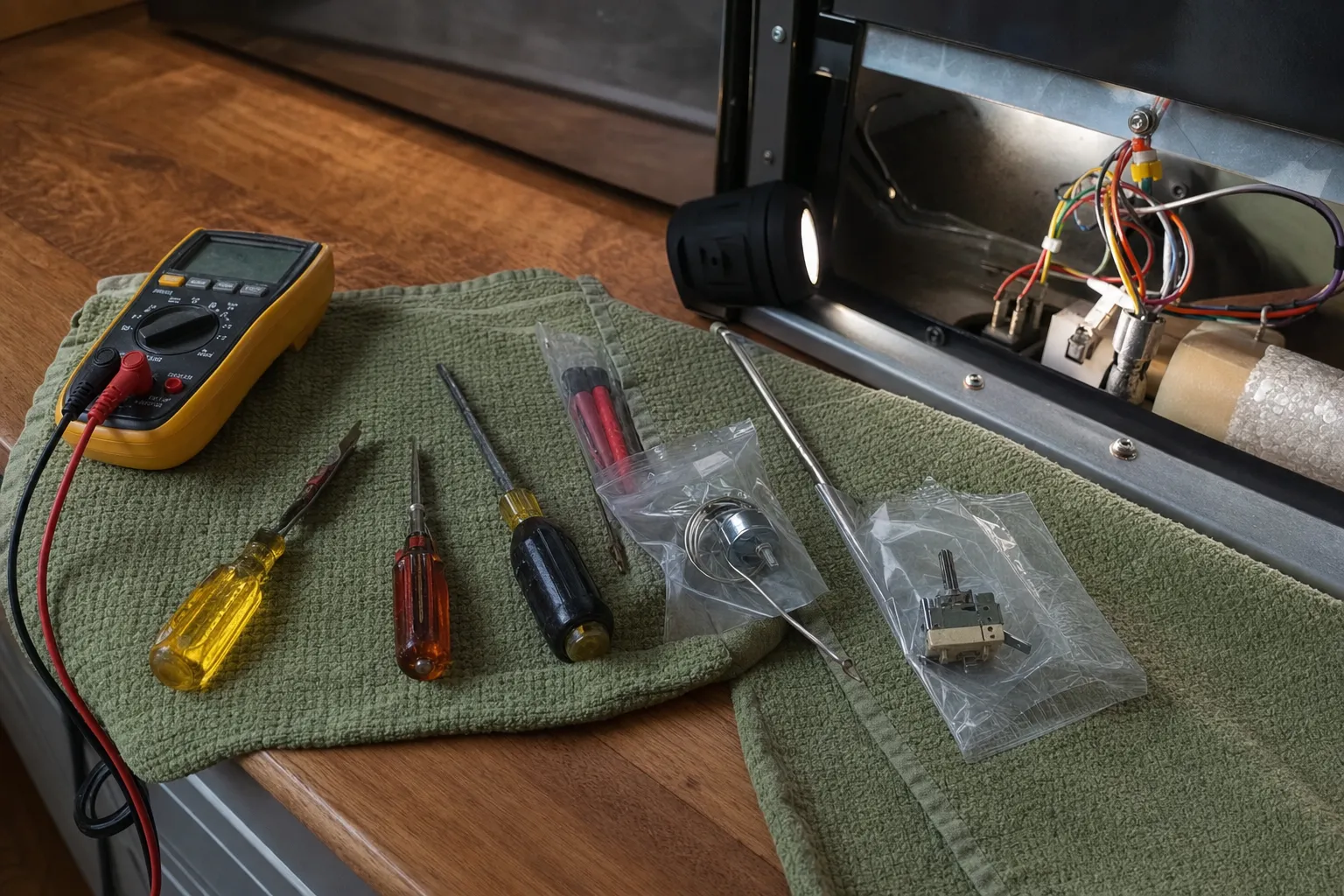
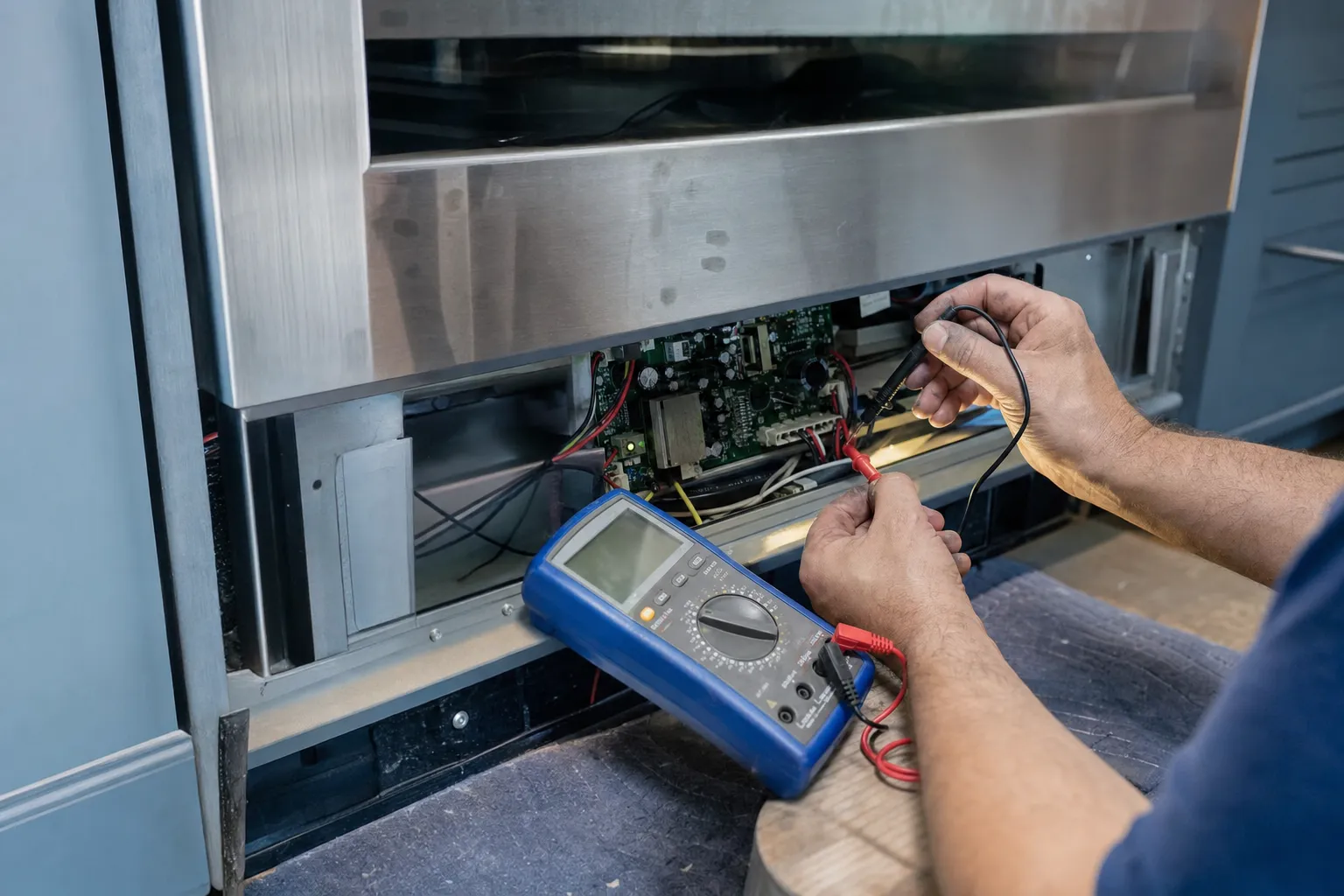
The visit is $89, and it is a diagnosis rather than a guess. We read compartment temperatures independently of the display, check the condenser and evaporator fans, test the defrost circuit, inspect the door seals and the vacuum seal behaviour, open the grille or kickplate to look at the condenser, and where the fault points inside, put gauges on the sealed system.
Where a part turns out to be the answer, the price you are quoted after the diagnosis is the price, agreed before anything comes apart.
The hillside changes only one thing about the price, and it is worth stating: repairs that can be completed in place cost what they cost anywhere. It is the jobs that require the unit to come out of the opening and off the property that the drive makes expensive, and that is exactly the comparison that matters when a Squak Mountain or Talus column reaches the sealed-system band. In Olde Town the same choice is simpler, because getting the machine out is not part of the calculation.
The booking link is above; (425) 272-6613 if it needs a conversation.
Common follow-ups
Will you still come out to a Squak Mountain address in the middle of winter?
Yes. What changes is the planning rather than the willingness. We ask where a truck can stand, whether the drive holds frost through the morning, and whether the likely fault needs the unit out of its opening at all. Most diagnoses and most repairs happen in place, and the slope has no bearing on those. It is removals that need a conversation before a date is set.
Do the door panels really have to come off to move the unit?
On a hillside entry, usually. Custom panels are the most expensive thing to damage and the first thing to catch a stair nosing or a tight turn, so they come off before the appliance is tipped at all. The base grille goes with them, and where the doorway geometry is awkward the hinge kit follows. Removing them is quicker than repairing joinery afterwards.
The door alarm keeps sounding since our delivery. Is the appliance faulty?
Check the alignment before assuming a fault. A column walked up a slope and turned through a doorway can settle slightly out of true in its opening, and a door that no longer pulls itself shut will both sound the alarm and warm the compartment. Levelling and door adjustment account for a good share of the post-delivery calls we take in Issaquah Highlands and Talus.